Teaching & Learning
- AI use for graded coursework is governed through the cadet honor system rather than a tool-specific academic policy
- The handbook also explicitly notes that developments in artificial intelligence have created honor-code challenges, but it does not provide a separate university-wide AI coursework rule beyond these honor requirements
- The handbook states that cheating includes submitting someone else’s work, plagiarism, and receiving help without documenting it, and it directs cadets to clarify allowed collaboration with the instructor when course policy is unclear
4. Unique circumstances facing the Cadet Wing over the past few years with the Coronavirus pandemic paired with developments in technology like artificial intelligence have challenged and continue to challenge the Cadet Wing in terms of the Honor Code in unprecedented ways.
2.3.3. Cheat. Cheating is committing an act with the intent to receive undeserved credit or an unfair advantage. It also includes aiding or attempting to do the same.
2.3.3.1. Cheating can take many forms. Examples include the use of crib notes, submitting someone else’s work as your own, plagiarism, and receiving help but not documenting. The submission of undocumented work clearly implies it is the product of your own words or ideas, and you have not used this work for credit before. If you are unsure of a course policy, or what type of collaboration is allowed, clarify the matter with your instructor. If doubt exists, explain the situation to your instructor. This will allow you to exercise the responsibility and prudence expected of an honorable person, and there will be no deception.
- The documents provided do not state a distinct AI-specific examination rule
- AI use during exams or other assessments is not addressed in a separate AI exam policy
- Under the honor handbook, cheating is prohibited when done to receive undeserved credit or an unfair advantage, and the listed examples include use of crib notes
2.3.3. Cheat. Cheating is committing an act with the intent to receive undeserved credit or an unfair advantage. It also includes aiding or attempting to do the same.
2.3.3.1. Cheating can take many forms. Examples include the use of crib notes, submitting someone else’s work as your own, plagiarism, and receiving help but not documenting.
Research
Academic Integrity
- The policy is framed as an honor-code documentation requirement rather than an AI-specific citation rule
- The honor handbook requires documentation of help and treats undocumented assistance as deceptive when work is submitted as one's own
- When course policy or permitted collaboration is unclear, cadets are instructed to ask the instructor and explain the situation so there is no deception
2.3.3.1. Cheating can take many forms. Examples include the use of crib notes, submitting someone else’s work as your own, plagiarism, and receiving help but not documenting. The submission of undocumented work clearly implies it is the product of your own words or ideas, and you have not used this work for credit before. If you are unsure of a course policy, or what type of collaboration is allowed, clarify the matter with your instructor. If doubt exists, explain the situation to your instructor. This will allow you to exercise the responsibility and prudence expected of an honorable person, and there will be no deception.
- The academy uses a cadet-run honor-code enforcement system
- No AI-specific detection software is mentioned in the available sources
- Respondents are formally notified via a Honor Allegation Notification and given the opportunity to admit or deny
Cadets are expected to report themselves for any violation. In addition, they must confront any other cadet they believe may have violated the Honor Code and report the incident if the situation is not resolved.
The figure below depicts the cadet owned and operated Honor Code System. The goal from Case Call-in to violation / no violation is 30 calendar days or less.
The goal from violation to Commandant's or Superintendent's decision is 60 days or less.
C.1.2. Investigation Conclusion. The IT must consult the CLA before formulating the allegation(s) on the Honor Allegation Notification(s) (HAN). The HAN informs the respondent of an allegation against them and their rights. It also provides the respondent the opportunity to admit or deny violating the Honor Code.
Institutional & Administrative
- A separate document (COI.pdf) available on the USAFA domain was not reviewed and may contain additional institutional governance context
- The handbook notes it is periodically revised in response to ever-changing demands and influences while its foundational principles remain unchanged
- The available sources acknowledge artificial intelligence as a developing challenge for the Cadet Wing under the Honor Code but do not set out a broader university AI governance framework, committee structure, or adoption strategy
4. Unique circumstances facing the Cadet Wing over the past few years with the Coronavirus pandemic paired with developments in technology like artificial intelligence have challenged and continue to challenge the Cadet Wing in terms of the Honor Code in unprecedented ways.
5. Due to ever-changing demands and influences, this handbook is revised and strengthened periodically. However, the foundational principles that our Honor Code represents will forever remain unchanged.
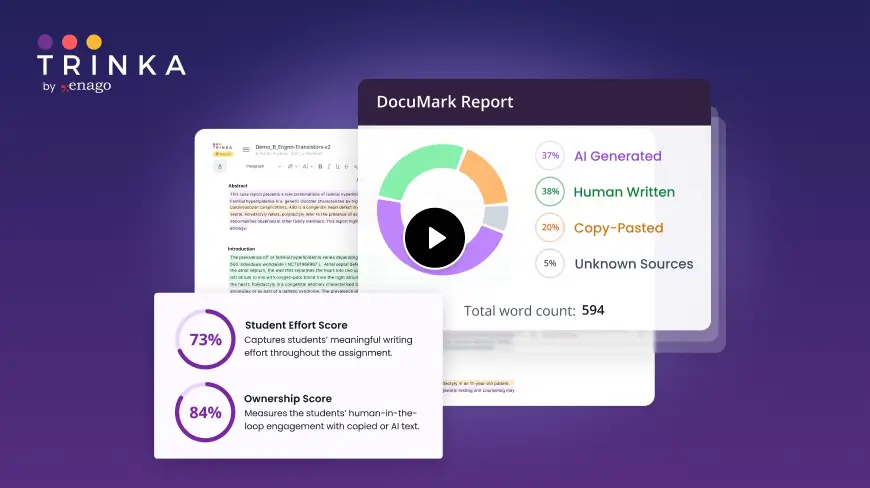
DocuMark: Responsible AI Use for Academic Integrity
Knowing your institution's AI policy is step one. DocuMark helps enforce it fairly by empowering universities to manage AI-generated content, prevent cheating, and support student writing through responsible AI use.
Common Questions About United States Air Force Academy's AI Policies
United States Air Force Academy has defined AI policies in 5 of 12 categories, with an overall coverage score of 42%.
The honor handbook requires documentation of help and treats undocumented assistance as deceptive when work is submitted as one's own. When course policy or permitted collaboration is unclear, cadets are instructed to ask the instructor and explain the situation so there is no deception. The policy is framed as an honor-code documentation requirement rather than an AI-specific citation rule.
The academy uses a cadet-run honor-code enforcement system. Cadets are expected to self-report violations and to confront and report other cadets when issues are not resolved. Cases are processed through the cadet-operated Honor Code System with a target of 30 calendar days from case call-in to a violation/no-violation finding, and 60 days from violation to the Commandant's or Superintendent's decision. Respondents are formally notified via a Honor Allegation Notification and given the opportunity to admit or deny. No AI-specific detection software is mentioned in the available sources.
No explicit data protection or approved AI platform policy is currently defined in the available policy sources.