Teaching & Learning
- This classification requires review of the library GenAI portal pages before it can be confirmed as not defined
- Specific assignment-level AI policies may be defined at the course or department level; the library GenAI pages likely provide foundational guidance on appropriate AI use in academic work
- West Point's library provides GenAI guidance resources for students covering outputs, practice, and prompting, and the Cadet Honor Code is directly relevant to academic integrity in coursework
West Point Library hosts a GenAI resource portal at https://library.westpoint.edu/GenAI with subpages covering citation, outputs, practice, and prompting, indicating institutional guidance on AI use relevant to coursework. The Cadet Honor Code at https://www.westpoint.edu/about/commandant/simon-center-for-the-professional-military-ethic/cadet-honor-code governs academic integrity for all cadet work including assignments.
- The library GenAI portal may contain additional guidance
- This classification cannot be confirmed as not defined without reviewing these sources
- The Cadet Honor Code governs all forms of academic assessment at West Point and is directly applicable to AI use during examinations
The Cadet Honor Code at https://www.westpoint.edu/about/commandant/simon-center-for-the-professional-military-ethic/cadet-honor-code establishes baseline academic integrity standards applicable to all assessments. The West Point Library GenAI portal at https://library.westpoint.edu/GenAI and its subpages may provide further guidance on AI use in assessed work.
- The library tutorials page also covers GenAI, suggesting a formal institutional position on AI-assisted learning
- West Point Library provides dedicated GenAI guidance pages on practice and prompting, indicating that the institution offers structured guidance on using AI tools as learning and study assistance
West Point Library maintains GenAI guidance pages at https://library.westpoint.edu/GenAI/practice and https://library.westpoint.edu/GenAI/prompting covering appropriate use of AI for learning purposes. A tutorials page at https://library.westpoint.edu/tutorials/genai further supports institutionally sanctioned AI study assistance.
- The library GenAI outputs page may contain further guidance applicable to programming contexts
- While no standalone code generation policy was extracted, the UPNEAR journal guidance acknowledges code generators as a category of GAI tool subject to transparency and verification requirements
The UPNEAR GenAI Supplemental Guidance references 'image/code generators' as examples of generative AI tools subject to institutional policy. The library GenAI portal at https://library.westpoint.edu/GenAI/outputs may address AI-generated code outputs.
Research
- Submitting AI-generated text without revision or attribution is prohibited
- For UPNEAR Journal submissions, AI use in manuscript preparation is permitted only with transparency, author verification, and human responsibility for originality and analysis
- Authors must disclose how AI was used, document that use in an acknowledgment section, and may use AI for brainstorming, draft text refinement, code or visualization generation, and proofreading
Generative AI (GAI) tools—such as ChatGPT, Copilot, and image/code generators—can accelerate research and creativity. However, their use must be transparent and consistent with academic integrity. Authors are responsible for ensuring accuracy, originality, and proper acknowledgment.
• Transparency: Clearly state if and how GAI was used in your work.
• Acknowledgment: Include an acknowledgment section detailing GAI assistance (tool name, prompt, purpose, and impact).
• Original Contribution: Ensure GAI does not replace critical thinking or substantive analysis.
• Add an Acknowledgment of GAI Assistance section in your manuscript.
• Brainstorming ideas or outlining structure.
• Generating draft text for refinement by the author.
• Language editing or proofreading.
• Submitting GAI-generated text without revision or attribution.
• Using AI to write the entire discussion section without acknowledgment.
- Authors may not rely on fabricated citations or unverifiable data, and AI cannot determine research conclusions without author validation
- For UPNEAR Journal submissions, AI may be used for code snippets or visualizations only if they are verified and explained, and authors must validate AI-generated data before use
• Verification: Validate all GAI-generated content, including citations, data, and code.
• Producing code snippets or visualizations that are verified and explained.
• Using fabricated citations or unverifiable data from GAI.
• Allowing GAI to determine research conclusions without author validation.
- The guidance also requires author validation of AI-generated content and prohibits using AI in ways that replace substantive analysis or unsupported conclusions
- For UPNEAR Journal submissions, AI use must be transparent and aligned with academic integrity, with authors retaining responsibility for accuracy, originality, and acknowledgment
However, their use must be transparent and consistent with academic integrity. Authors are responsible for ensuring accuracy, originality, and proper acknowledgment.
• Verification: Validate all GAI-generated content, including citations, data, and code.
• Original Contribution: Ensure GAI does not replace critical thinking or substantive analysis.
• Allowing GAI to determine research conclusions without author validation.
Academic Integrity
- For UPNEAR Journal submissions, disclosure of AI use is required
- Authors must clearly state whether and how AI was used and include an acknowledgment section specifying the tool name, prompt, purpose, and impact
• Transparency: Clearly state if and how GAI was used in your work.
• Acknowledgment: Include an acknowledgment section detailing GAI assistance (tool name, prompt, purpose, and impact).
• Add an Acknowledgment of GAI Assistance section in your manuscript.
- No AI-specific detection tool policy is defined in the available sources
- However, the West Point Cadet Honor Code governs academic integrity violations including those involving AI misuse
- The UPNEAR journal guidance identifies prohibited AI practices such as submitting unattributed AI-generated text and using fabricated citations, but does not specify detection tools or penalty procedures beyond the overarching honor system
• Submitting GAI-generated text without revision or attribution.
• Using fabricated citations or unverifiable data from GAI.
• Allowing GAI to determine research conclusions without author validation.
The Cadet Honor Code at https://www.westpoint.edu/about/commandant/simon-center-for-the-professional-military-ethic/cadet-honor-code serves as the primary enforcement mechanism for academic integrity at West Point, applicable to violations involving AI misuse.
Institutional & Administrative
- West Point's modernization plan includes an artificial intelligence and military leadership component that is relevant to faculty and staff AI use in an institutional context
- This page likely contains guidance or strategic direction for faculty integrating AI into teaching and administrative functions and should be reviewed before this classification is marked as not defined
West Point's official modernization plan includes a dedicated section on artificial intelligence and military leadership at https://www.westpoint.edu/about/modernization-plan/artificial-intelligence-military-leadership, indicating institutional-level guidance relevant to faculty and staff AI use.
- The available sources do not identify any approved institutional AI platforms
- For UPNEAR Journal submissions, sensitive or classified information must not be entered into generative AI tools
• Security: Do not input sensitive or classified information into GAI tools.
- This represents an institutional AI strategy relevant to U12 and should be reviewed to determine the full scope of West Point's AI governance framework
- West Point has an institutional modernization plan that includes an artificial intelligence and military leadership component, indicating a formal governance and strategic direction for AI at the academy level
West Point's modernization plan includes a dedicated artificial intelligence and military leadership section at https://www.westpoint.edu/about/modernization-plan/artificial-intelligence-military-leadership, indicating institutional-level AI governance and strategic planning.
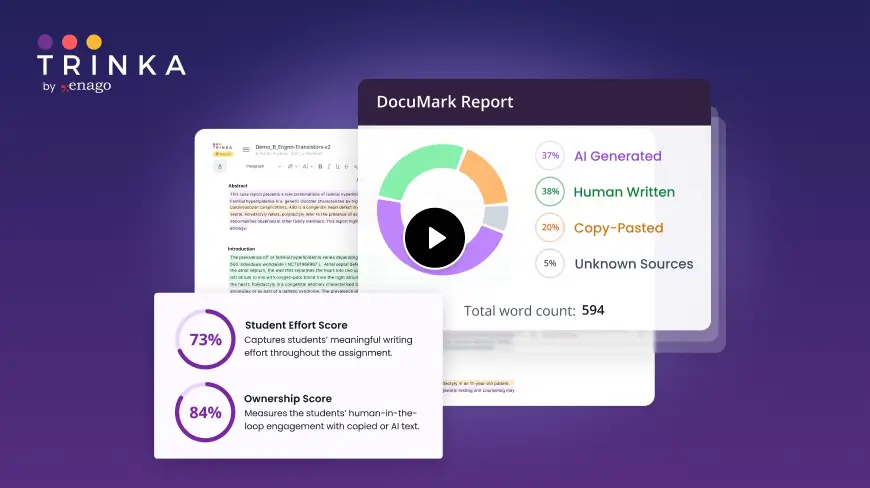
DocuMark: Responsible AI Use for Academic Integrity
Knowing your institution's AI policy is step one. DocuMark helps enforce it fairly by empowering universities to manage AI-generated content, prevent cheating, and support student writing through responsible AI use.
Common Questions About United States Military Academy's AI Policies
United States Military Academy has defined AI policies in 12 of 12 categories, with an overall coverage score of 100%.
For UPNEAR Journal submissions, disclosure of AI use is required. Authors must clearly state whether and how AI was used and include an acknowledgment section specifying the tool name, prompt, purpose, and impact.
No AI-specific detection tool policy is defined in the available sources. However, the West Point Cadet Honor Code governs academic integrity violations including those involving AI misuse. The UPNEAR journal guidance identifies prohibited AI practices such as submitting unattributed AI-generated text and using fabricated citations, but does not specify detection tools or penalty procedures beyond the overarching honor system.
For UPNEAR Journal submissions, sensitive or classified information must not be entered into generative AI tools. The available sources do not identify any approved institutional AI platforms.