Teaching & Learning
- The Naval Academy's honor policy requires all submitted work to be the student's own and any assistance from any source to be authorized and properly documented
- Course-level policies on AI tool use are governed through individual course syllabi in accordance with Provost Instruction 1531.82B, which establishes syllabus content requirements including guidance on authorized resources and academic integrity expectations
- No AI-specific examination policy is explicitly defined in the reviewed sources
- However, the Naval Academy's honor policy applies to all assessed work, requiring that submitted work be the student's own and that any assistance be authorized
- Course-level assessment rules, including permitted resources during examinations, are set by instructors through syllabi governed by Provost Instruction 1531.82B
- The honor policy's requirement for authorized assistance applies broadly to any study aid used
- No explicit AI-specific learning and study assistance policy was identified in the primary sources reviewed
- The Naval Academy's Center for Teaching and Learning maintains an Educational Technologies resource page that may address approved learning tools and platforms available to midshipmen
Research
- No AI-specific research writing or manuscript preparation policy was identified in the primary sources reviewed
- The Naval Academy maintains an Academic Research information portal with researcher policies and instructions that should be consulted for any applicable guidance on use of AI tools in research writing and publication activities
- The provided research compliance text does not mention AI tools specifically
- It does state that research involving collection and analysis of information may fall within formal research oversight, and that research involving people or private identifiable information requires IRB approval before starting
- The provided source text does not define AI-specific research ethics rules, but it does require formal human-subjects oversight where applicable
- Anyone conducting research involving people or private identifiable information must obtain IRB approval before beginning, and required training applies to those proposing, performing, reviewing, analyzing, or reporting research, including midshipmen
Academic Integrity
- Its honor policy requires that any assistance from any source be authorized and properly documented
- The Naval Academy does not provide an AI-specific disclosure or citation rule in the primary policy documents reviewed
- The USNA library maintains a plagiarism guide that may provide attribution guidance applicable to AI-generated content, and course syllabi governed by Provost Instruction 1531.82B may specify AI disclosure requirements at the course level
- The provided source text does not mention AI detection tools
- It does state that honor violations are processed through formal procedures and that sanctions are imposed for violations, with consistent processing and effective sanctions expected across the academy
Institutional & Administrative
- The provided source text does not define AI-specific rules for faculty or staff use
- It does state that faculty and staff are responsible for supporting midshipmen's moral development and for supporting transparent honor-case processing
- As a Department of Defense institution, the Naval Academy is subject to federal data protection and cybersecurity requirements
- No explicit AI platform approval or institutional data protection policy specific to AI tools was identified in the primary sources reviewed
- The CTL Educational Technologies page may list institutionally approved platforms and tools, and any AI platform use would likely need to comply with DoD data handling requirements
- As a DoD institution, USNA AI governance is also subject to applicable Department of Navy and DoD-level AI policy directives
- No explicit institutional AI governance strategy or dedicated AI policy framework was identified in the primary sources reviewed
- The Naval Academy's academic governance is managed through Provost Instructions, and any emerging AI governance would likely be issued through that channel
DocuMark: Responsible AI Use for Academic Integrity
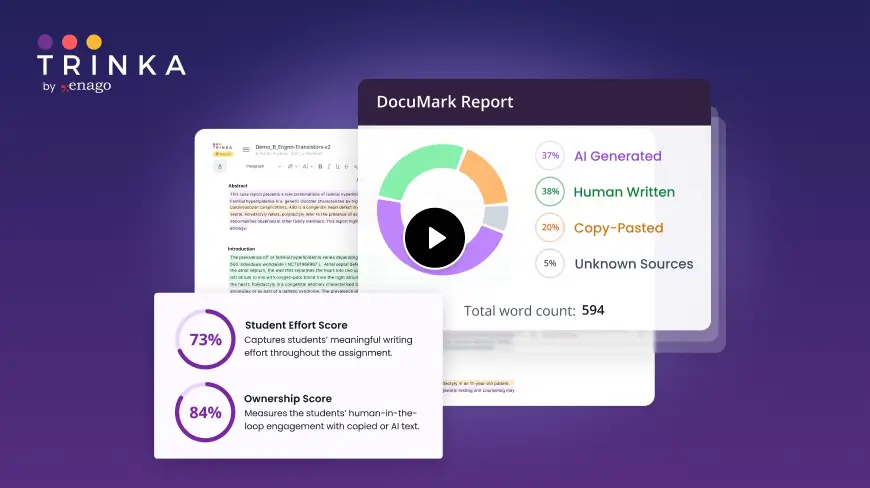
Knowing your institution's AI policy is step one. DocuMark helps enforce it fairly by empowering universities to manage AI-generated content, prevent cheating, and support student writing through responsible AI use.
Common Questions About United States Naval Academy's AI Policies
United States Naval Academy has defined AI policies in 11 of 12 categories, with an overall coverage score of 92%.
The Naval Academy does not provide an AI-specific disclosure or citation rule in the primary policy documents reviewed. Its honor policy requires that any assistance from any source be authorized and properly documented. The USNA library maintains a plagiarism guide that may provide attribution guidance applicable to AI-generated content, and course syllabi governed by Provost Instruction 1531.82B may specify AI disclosure requirements at the course level.
The provided source text does not mention AI detection tools. It does state that honor violations are processed through formal procedures and that sanctions are imposed for violations, with consistent processing and effective sanctions expected across the academy.
No explicit AI platform approval or institutional data protection policy specific to AI tools was identified in the primary sources reviewed. As a Department of Defense institution, the Naval Academy is subject to federal data protection and cybersecurity requirements. The CTL Educational Technologies page may list institutionally approved platforms and tools, and any AI platform use would likely need to comply with DoD data handling requirements.