Teaching & Learning
- Use of AI in coursework and assignments is governed by instructor-defined authorization and syllabus/class discussion rules
- Instructors are strongly encouraged to be specific about expectations and limitations for student AI use in assignments and to hold students responsible for accuracy of facts and sources
- The systemwide student conduct code treats using sources beyond those authorized by the instructor (including AI) as cheating, and treats unacknowledged use of AI technology as plagiarism
Cheating is an act of academic dishonesty and includes, but is not limited to: (1) use of any unauthorized assistance in taking quizzes, tests, or examinations; (2) use of sources beyond those authorized by the instructor in writing papers, preparing reports, solving problems, or carrying out other assignments; (3) the acquisition, without permission, of tests or other academic material belonging to a member of the UH faculty, staff or student body; and (4) engaging in any behavior specifically prohibited by a faculty member in the course syllabus or class discussion.
Plagiarism is also an act of academic dishonesty and includes, but is not limited to the use, by paraphrase or direct quotation, of the published or unpublished work of another person without full and clear acknowledgement. It also includes the unacknowledged use of AI technology and/or materials prepared by another person or agency available publicly or through a purchase.
The UHM student code of conduct (IV.B.1.a) addresses “Cheating, plagiarism, or other forms of academic dishonesty.” It gives the instructor authority over defining unauthorized assistance, authorized sources, and specifically prohibited behavior in classes. For this reason, instructors are strongly encouraged to:
1. Be specific about expectations and limitations on student use of AI in assignments,
2. Hold students responsible for the accuracy of facts and sources used in assignments, and to
3. Talk through scenarios with classes to provide clarity on expectations
Syllabi and class discussions should make instructor expectations clear with respect to use of AI tools.
- Use of AI during examinations and assessments is treated as academic dishonesty when it constitutes unauthorized assistance, which is defined by the instructor and/or prohibited by the syllabus/class discussion
- University guidance emphasizes instructor autonomy and clear communication of academic integrity expectations, including specifying which activities or assignments allow AI and examples of permissible and impermissible use cases
Cheating is an act of academic dishonesty and includes, but is not limited to: (1) use of any unauthorized assistance in taking quizzes, tests, or examinations; (2) use of sources beyond those authorized by the instructor in writing papers, preparing reports, solving problems, or carrying out other assignments; (3) the acquisition, without permission, of tests or other academic material belonging to a member of the UH faculty, staff or student body; and (4) engaging in any behavior specifically prohibited by a faculty member in the course syllabus or class discussion.
Expectations-always clearly communicate your expectations when it comes to the use of AI. Clearly articulate academic integrity expectations to students, including guidelines on the appropriate use of AI tools within a syllabus specifying which activities or assignments allow the use of AI with examples of permissible and impermissible use cases.
It gives the instructor authority over defining unauthorized assistance, authorized sources, and specifically prohibited behavior in classes.
- The university encourages faculty and students to experiment with AI tools for learning, within legal and ethical parameters
- No systemwide rule is stated for student personal study use beyond these recommendations and the general academic integrity framework
- Guidance highlights AI as a potential tutoring and study-support tool (e.g., intelligent tutoring systems) while emphasizing that AI outputs can be inaccurate and that students need to evaluate information for credibility and accuracy
Experts agree that generative AI tools are here to stay. Teaching and learning about AI is one piece of a need to assist students in learning appropriate 21st century digital skills.
Faculty and students are encouraged to experiment with AI tools while staying within legal and ethical parameters to the best of their ability.
Tutoring-AI intelligent tutoring systems can provide personalized guidance, feedback, and support to students.
Limitations-students also need to understand the limitations of AI tools. They need to evaluate all information for credibility and accuracy.
- Separate teaching guidance recommends decentralized, instructor-led decisions about AI use in courses and encourages instructors to clearly specify permissible and impermissible uses
- Systemwide academic integrity rules apply to AI-assisted code generation in programming assignments: using AI is cheating if it is an unauthorized source/assistance as defined by the instructor and/or prohibited by the syllabus/class discussion, and it is plagiarism if AI use is unacknowledged
Cheating is an act of academic dishonesty and includes, but is not limited to: (1) use of any unauthorized assistance in taking quizzes, tests, or examinations; (2) use of sources beyond those authorized by the instructor in writing papers, preparing reports, solving problems, or carrying out other assignments; (3) the acquisition, without permission, of tests or other academic material belonging to a member of the UH faculty, staff or student body; and (4) engaging in any behavior specifically prohibited by a faculty member in the course syllabus or class discussion.
Plagiarism is also an act of academic dishonesty and includes, but is not limited to the use, by paraphrase or direct quotation, of the published or unpublished work of another person without full and clear acknowledgement. It also includes the unacknowledged use of AI technology and/or materials prepared by another person or agency available publicly or through a purchase.
Recognizing the diverse and evolving nature of generative AI technologies, and the nuanced applications within the University of Hawaiʻi system, a decentralized decision-making approach regarding the use of AI tools is recommended. This approach prioritizes instructor autonomy and allows individual faculty members to determine the appropriateness of incorporating AI tools into their teaching practices.
Expectations-always clearly communicate your expectations when it comes to the use of AI. Clearly articulate academic integrity expectations to students, including guidelines on the appropriate use of AI tools within a syllabus specifying which activities or assignments allow the use of AI with examples of permissible and impermissible use cases.
Research
- University guidance notes risks to academic and research integrity if AI outputs are relied on without proper review
- The systemwide student conduct code treats unacknowledged use of AI technology as plagiarism, which applies to student research writing submissions
- Beyond the general integrity framework, the provided graduate thesis/dissertation guidelines do not explicitly define rules on using AI for drafting or editing manuscripts
Plagiarism is also an act of academic dishonesty and includes, but is not limited to the use, by paraphrase or direct quotation, of the published or unpublished work of another person without full and clear acknowledgement. It also includes the unacknowledged use of AI technology and/or materials prepared by another person or agency available publicly or through a purchase.
Academic and research integrity and bias . Outputs may be factually inaccurate, misleading, biased, and/or discriminatory if we rely on the information without proper review. This puts us at risk of violating UH policies and potential liability.
- It also points users to observing existing UH policies on privacy/security and academic and research integrity
- The provided sources do not define specific research data/analysis rules unique to AI (e.g., synthetic data or AI analysis requirements)
- University system guidance warns of risks related to privacy/security and research integrity when using AI tools, emphasizing that inputs could become public or be used to train models and that outputs may be inaccurate or biased without proper review
Privacy and security . Personal information shared as an input could potentially become public and/or repurposed to train the software’s learning model, violating data protection laws and UH policies.
Academic and research integrity and bias . Outputs may be factually inaccurate, misleading, biased, and/or discriminatory if we rely on the information without proper review. This puts us at risk of violating UH policies and potential liability.
Consequently, in addition to any formal policy UH adopts for AI, UH Policies on privacy and security (e.g., EP 2.210, EP 2.214, EP 2.215, AP 7.022), academic and research integrity and bias (e.g., EP 1.202, EP 1.204, EP 7.208, EP 12.211); and copyright (e.g., EP 12.205) should also be observed.
- The provided sources do not define explicit AI-specific requirements for research ethics filings (e.g., IRB applications, grant proposals) or ethics declarations
- University system guidance emphasizes that AI outputs may be inaccurate or biased without proper review and that use of AI must observe existing UH policies on academic and research integrity and related areas
Academic and research integrity and bias . Outputs may be factually inaccurate, misleading, biased, and/or discriminatory if we rely on the information without proper review. This puts us at risk of violating UH policies and potential liability.
Consequently, in addition to any formal policy UH adopts for AI, UH Policies on privacy and security (e.g., EP 2.210, EP 2.214, EP 2.215, AP 7.022), academic and research integrity and bias (e.g., EP 1.202, EP 1.204, EP 7.208, EP 12.211); and copyright (e.g., EP 12.205) should also be observed.
Academic Integrity
- The policy requires “full and clear acknowledgement” when using others’ work, and extends this to AI technology use when unacknowledged
- Disclosure is required in the sense that unacknowledged use of AI technology is explicitly included in the definition of plagiarism under the systemwide student conduct code
- Instructor rules (syllabus/class discussion) also define authorized sources and prohibited behaviors, affecting what must be disclosed or attributed within course submissions
Plagiarism is also an act of academic dishonesty and includes, but is not limited to the use, by paraphrase or direct quotation, of the published or unpublished work of another person without full and clear acknowledgement. It also includes the unacknowledged use of AI technology and/or materials prepared by another person or agency available publicly or through a purchase.
It gives the instructor authority over defining unauthorized assistance, authorized sources, and specifically prohibited behavior in classes.
- The provided sources do not specify particular detection platforms or enforcement tools, but they establish conduct standards and instructor authority via syllabus/class discussion
- The systemwide student conduct code establishes that cheating and plagiarism (including unacknowledged AI use) are acts of academic dishonesty and subject students to the disciplinary process and sanctions
- Guidance for instructors additionally advises refraining from sharing or inputting student work into online AI tools, including AI detection tools, without student consent due to FERPA and copyright concerns
The following are examples of the types of behavior that conflict with the community standards that UH values and expects of students. Engaging in, or attempting to engage in any of these behaviors subjects a student to the disciplinary process and sanctions on each campus.
Cheating, plagiarism, or other forms of academic dishonesty.
Plagiarism is also an act of academic dishonesty and includes, but is not limited to the use, by paraphrase or direct quotation, of the published or unpublished work of another person without full and clear acknowledgement. It also includes the unacknowledged use of AI technology and/or materials prepared by another person or agency available publicly or through a purchase.
Instructors should refrain from sharing or inputting student work into online AI tools, including AI detection tools, without obtaining student consent. Uploading student work has potential FERPA implications as well as potential copyright concerns. Additionally, the uploaded content could be used as data for training of the AI, without the student's consent.
Institutional & Administrative
- Additional system guidance indicates a cross-functional effort is underway to equip the UH community and develop/implement policy changes addressing AI’s impact
- UH guidance recommends a decentralized approach that prioritizes instructor autonomy and states UH will not prescribe a formal policy for use of AI, instead empowering instructors to decide how to incorporate AI into teaching
- Faculty are encouraged to communicate expectations to students, and instructors are advised not to share or input student work into online AI tools (including AI detection tools) without student consent due to FERPA and copyright concerns
Recognizing the diverse and evolving nature of generative AI technologies, and the nuanced applications within the University of Hawaiʻi system, a decentralized decision-making approach regarding the use of AI tools is recommended. This approach prioritizes instructor autonomy and allows individual faculty members to determine the appropriateness of incorporating AI tools into their teaching practices.
UH will not prescribe a formal policy for the use of AI, rather the importance of empowering instructors to make informed decisions based on their pedagogical goals, subject matter, and student needs will be followed.
Instructors should refrain from sharing or inputting student work into online AI tools, including AI detection tools, without obtaining student consent. Uploading student work has potential FERPA implications as well as potential copyright concerns.
The University of Hawaii has initiated a comprehensive, cross-functional effort to equip the UH community with essential tools, guidance, and best practices for effectively integrating AI into academic and professional environments. Additionally, efforts are underway to develop and implement policy changes that address the evolving impact of AI on work and education.
- UH guidance emphasizes privacy/security risks of AI tools, warning that personal information inputs could become public or be repurposed for model training, and encourages observing existing UH policies on data governance and student data protection
- EP 2.219 sets institutional expectations for how Student Data shall be managed by third-party vendors in instructional contexts, and EP 2.215 states that DGP review and approval are required in most cases where Institutional Data will be shared with third parties
- It provides an AI Tool Decision Guide and directs that if use involves Sensitive or Regulated data, users must submit a request through the Data Governance Process; for teaching/learning, research, and work-related functions it highly recommends using ITS sponsored tools when available because contract language is vetted for privacy/security and to prevent personal data exposure or AI training use
Privacy and security . Personal information shared as an input could potentially become public and/or repurposed to train the software’s learning model, violating data protection laws and UH policies.
The AI Tool Decision Guide helps University of Hawaiʻi faculty, staff, and students evaluate artificial intelligence tools before use or purchase.
Use this step-by-step checklist before choosing any AI tool. If your use involves Sensitive or Regulated data, submit a request through the Data Governance Process (DGP).
When using AI tools for teaching and learning, research, and work-related functions, it is highly recommended that you use ITS sponsored tools when available. The contract language for ITS sponsored tools has been vetted for privacy and security considerations, such as ensuring that safeguards in place to prevent personal data from being exposed or used for AI training.
This Policy sets forth the University’s expectations of how our Student Data shall be managed by external parties by: (1) establishing institutional requirements that limit the ways in which Third Party Vendors who enter into contracts with the University can use Student Data as part of the delivery of good and services;
This Policy is applicable to any formal or informal agreements, including free online subscriptions, made by faculty and programs that require students to use products directly from Third Party Vendors for School Purposes.
In most cases where Institutional Data will be collected, managed, shared, exchanged, used and/or released with third parties, a Data Governance Process (DGP) review and approval are required.
- UH system guidance describes an ongoing cross-functional effort to equip the UH community with tools, guidance, and best practices and notes that efforts are underway to develop and implement policy changes addressing AI’s impact
- It also references a formal governance body, the “University of Hawai‘i Artificial Intelligence Strategy Council (AISC).” Teaching-related guidance states UH will not prescribe a formal policy for AI use and recommends a decentralized decision-making approach that prioritizes instructor autonomy
The University of Hawaii has initiated a comprehensive, cross-functional effort to equip the UH community with essential tools, guidance, and best practices for effectively integrating AI into academic and professional environments. Additionally, efforts are underway to develop and implement policy changes that address the evolving impact of AI on work and education.
University of Hawai‘i Artificial Intelligence Strategy Council (AISC)
UH will not prescribe a formal policy for the use of AI, rather the importance of empowering instructors to make informed decisions based on their pedagogical goals, subject matter, and student needs will be followed.
Recognizing the diverse and evolving nature of generative AI technologies, and the nuanced applications within the University of Hawaiʻi system, a decentralized decision-making approach regarding the use of AI tools is recommended.
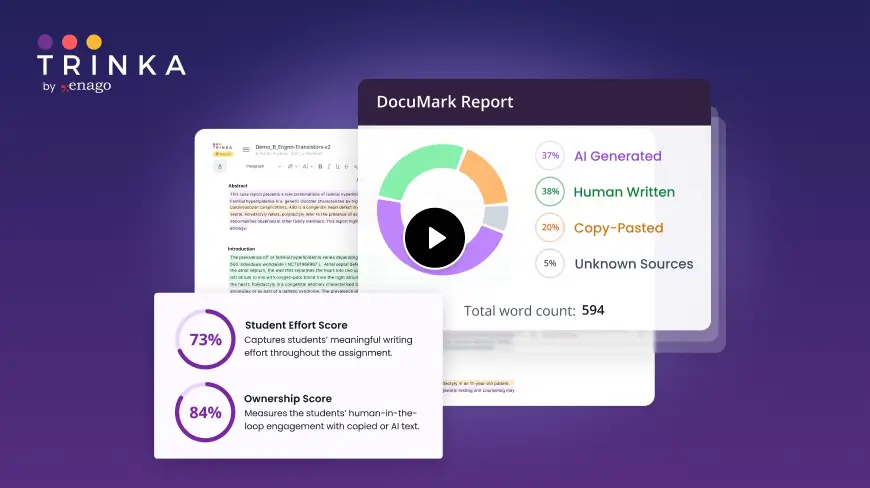
DocuMark: Responsible AI Use for Academic Integrity
Knowing your institution's AI policy is step one. DocuMark helps enforce it fairly by empowering universities to manage AI-generated content, prevent cheating, and support student writing through responsible AI use.
Common Questions About University of Hawaii at Manoa's AI Policies
University of Hawaii at Manoa has defined AI policies in 12 of 12 categories, with an overall coverage score of 100%.
Disclosure is required in the sense that unacknowledged use of AI technology is explicitly included in the definition of plagiarism under the systemwide student conduct code. The policy requires “full and clear acknowledgement” when using others’ work, and extends this to AI technology use when unacknowledged. Instructor rules (syllabus/class discussion) also define authorized sources and prohibited behaviors, affecting what must be disclosed or attributed within course submissions.
The systemwide student conduct code establishes that cheating and plagiarism (including unacknowledged AI use) are acts of academic dishonesty and subject students to the disciplinary process and sanctions. Guidance for instructors additionally advises refraining from sharing or inputting student work into online AI tools, including AI detection tools, without student consent due to FERPA and copyright concerns. The provided sources do not specify particular detection platforms or enforcement tools, but they establish conduct standards and instructor authority via syllabus/class discussion.
UH guidance emphasizes privacy/security risks of AI tools, warning that personal information inputs could become public or be repurposed for model training, and encourages observing existing UH policies on data governance and student data protection. It provides an AI Tool Decision Guide and directs that if use involves Sensitive or Regulated data, users must submit a request through the Data Governance Process; for teaching/learning, research, and work-related functions it highly recommends using ITS sponsored tools when available because contract language is vetted for privacy/security and to prevent personal data exposure or AI training use. EP 2.219 sets institutional expectations for how Student Data shall be managed by third-party vendors in instructional contexts, and EP 2.215 states that DGP review and approval are required in most cases where Institutional Data will be shared with third parties.