Teaching & Learning
- The policy also states that AI should support original work rather than replace it
- AI use in coursework is permitted only within the parameters set for the specific assessment
- The university requires students to follow assessment guidance, and use outside the permitted scope may be treated as an academic offence
4.4 AI enhanced assessments: The academic decision to incorporate AI within assessments is driven
by the pedagogical requirements and assessment outcomes. As such, use of AI, depending on the
assessment type may not be appropriate and use of AI could be excluded from a particular
assessment (in preparation and/or delivery). Full guidance (where, when, and how) including any
rationale must be provided within the assessment brief. Student failure to follow the guidance could
result in an academic offence.
5.2 Plagiarism Prevention: Proper attribution is required for any AI-generated content to prevent
plagiarism. AI should support original work, not replace it. Where AI is permitted within
assessments, full and clear guidance must be provided to students on what, where, and how AI can
be used. Any use of AI within the specified assessment outside of these permitted parameters is not
allowed and may be subject to an academic offence.
Unauthorised use of AI is using AI tools in ways not permitted by your course, such as generating or editing work that you submit as your own. It misrepresents your effort and breaches academic integrity.
- Breaching that guidance can result in an academic offence
- Use of AI in assessments is determined at assessment level
- The university allows AI only where the assessment brief explicitly permits it and requires full guidance on where, when, and how it may be used; AI may also be excluded entirely from a particular assessment
4.4 AI enhanced assessments: The academic decision to incorporate AI within assessments is driven
by the pedagogical requirements and assessment outcomes. As such, use of AI, depending on the
assessment type may not be appropriate and use of AI could be excluded from a particular
assessment (in preparation and/or delivery). Full guidance (where, when, and how) including any
rationale must be provided within the assessment brief. Student failure to follow the guidance could
result in an academic offence.
5.2 Plagiarism Prevention: Proper attribution is required for any AI-generated content to prevent
plagiarism. AI should support original work, not replace it. Where AI is permitted within
assessments, full and clear guidance must be provided to students on what, where, and how AI can
be used. Any use of AI within the specified assessment outside of these permitted parameters is not
allowed and may be subject to an academic offence.
- It requires AI to complement rather than replace human interaction, and users must review AI feedback for accuracy and relevance
- The university encourages students to become familiar with AI for learning support and permits AI for personalised feedback, knowledge acquisition, and support
4.1 All students are encouraged to familiarise themselves with AI technologies to enhance their learning
and develop their knowledge. If students are using AI, they must ensure that they adopt ethical
approaches that maintains academic integrity and adheres to assessment guidance and university
policy.
4.2 Support Student Learning: AI tools can be used to provide personalised feedback, knowledge
acquisition and support, helping students identify areas for improvement and enhance their learning
experience. Over-reliance on AI feedback, however, may reduce (or give the impression of
reducing) student engagement with human teaching staff. Ensure AI tools complement, rather than
replace, human interaction. Regularly review AI feedback for accuracy and relevance.
- Any coding-related AI use in assessed work is governed by the assessment brief and academic integrity requirements
- The university notes that some AI tools can help with basic code, but it does not set a separate university-wide rule for programming assignments beyond the general assessment rules
Data handling: some tools can help you analyse data, create charts, or write basic code.
4.4 AI enhanced assessments: The academic decision to incorporate AI within assessments is driven
by the pedagogical requirements and assessment outcomes. As such, use of AI, depending on the
assessment type may not be appropriate and use of AI could be excluded from a particular
assessment (in preparation and/or delivery). Full guidance (where, when, and how) including any
rationale must be provided within the assessment brief. Student failure to follow the guidance could
result in an academic offence.
Research
- The misconduct framework includes misrepresentation, plagiarism, and improper handling of privileged or private information collected during research
- Research misconduct procedures apply to staff research, while allegations against students, including postgraduate research students, are handled under the university's general regulations
- The university's research integrity framework applies to all staff and students conducting research and requires adherence to accepted procedures that protect participants, the environment, and research integrity
The University of Lincoln’s Research Ethics Policy is intended to support good conduct in research and
research related activities, in order to encourage research of the highest quality. It provides general principles
and standards for good ethical practice in research, for the individual researcher (staff member or student)
and the institution as a whole.
This policy is applicable to all staff and students and should be read in conjunction with the University's Code
of Practice for Research, which reflects the principles and commitments outlined in the Concordat to
Support Research Integrity.
Misconduct in research includes fabricating or falsifying data, misrepresenting findings, interests, or involvement, and failing to follow accepted procedures that protect participants, the environment, or research integrity. It also covers the improper handling of confidential or personal information collected during research.
The UKRIO Procedure comprehensively defines the process for dealing with allegations of
misconduct in research against staff members at the University of Lincoln. Allegations against
students (including Post-graduate research students) should be dealt with under the
University’s General Regulations.
• UKRIO defines misconduct in research as including, but not limited to:
a) Fabrication
b) Falsification
c) Misrepresentation of data and/or interests and/or involvement
d) Plagiarism
e) Failure to follow accepted procedures or to exercise due care in carrying out
responsibilities for:
i) Avoiding unreasonable risk or harm to:
- humans
- animals used in research
- the environment
ii) The proper handling of privileged or private information on individuals collected
during the research
Academic Integrity
- AI-generated content must not be presented as one's own without acknowledgment
- The university requires disclosure of AI use and proper attribution of AI-generated content
- This applies to users' work generally, and for assessments the university requires clear guidance to students on permitted AI use
5.2 Plagiarism Prevention: Proper attribution is required for any AI-generated content to prevent
plagiarism. AI should support original work, not replace it. Where AI is permitted within
assessments, full and clear guidance must be provided to students on what, where, and how AI can
be used.
5.3 Transparency: All users must disclose the use of AI in their work. AI-generated content should be
properly attributed and not presented as one’s own without acknowledgment. This includes
informing staff and students about how AI tools are used, the data they collect, and how that data is
used to support learning outcomes.
- The university states that unauthorised AI use is an academic integrity breach and may be treated as an academic offence
- No explicit university position on formal AI detection platforms such as Turnitin or GPTZero is defined in the provided sources
- It also cautions against using AI tools to check originality because they cannot reliably detect this and may produce false feedback
Student failure to follow the guidance could
result in an academic offence.
Any use of AI within the specified assessment outside of these permitted parameters is not
allowed and may be subject to an academic offence.
Unauthorised use of AI is using AI tools in ways not permitted by your course, such as generating or editing work that you submit as your own. It misrepresents your effort and breaches academic integrity.
Avoid copying and pasting students’ work into AI tools to check for originality. AI cannot reliably detect this and may produce false feedback.
Institutional & Administrative
- Human oversight is explicitly required for grading and feedback, and staff and students must always review AI-generated content before use
- The university encourages staff to familiarise themselves with AI and says the university provides training and resources for effective use in teaching
- Staff may use AI for content creation, lesson planning, quizzes, summaries, grading, and feedback, but they remain responsible for accuracy and relevance
4.5 Staff Training: All staff are encouraged to familiarise themselves with AI technologies to integrate
them effectively into their teaching practices. The University provides training and resources to help
staff understand the capabilities and limitations of AI tools.
4.7 Content Creation and Curation: AI can be effective in assisting the creation and curation of
educational content, such as generating lesson plans, quizzes, summarising lecture notes, and
recommending additional resources. AI tools cannot be relied upon to be accurate, and quality and
relevance of AI-generated content may vary. Any use of AI is the responsibility of the user, and they
remain accountable for accuracy and relevancy of materials generated. Staff who teach and
students must always review AI-generated content before use.
4.9 Fair Assessment: While AI tools can significantly aid in grading and providing feedback, it is crucial
to maintain rigorous human oversight to uphold the quality and integrity of assessments. This
overseight ensures that AI-driven evaluations are fair, unbiased, and aligned with University of
Lincoln academic standards.
- The provided sources do not name a specific list of approved AI platforms
- The university requires AI use to comply with its broader data protection, information classification, intellectual property, and acceptable use policies
- It prohibits inputting personal data into AI systems in the cited guidance, and it requires that uploaded content be allowed by the university or rights holder and properly licensed or used under fair use provisions
All use of AI must comply with other
existing University policies (external website), such as the AI Policy, the Data Protection Policy, the
Information Ownership and Classification Policy, the IP Policy and the Digital Services Acceptable
Use Policy.
5.7 Intellectual Property Rights (IPR) and Copyright: Staff who teach and students must respect IPR
and copyright laws when using AI tools and resources. This includes:
5.7.1 Ensuring that any content uploaded to AI services is allowed by the University or IPR holder, is
properly licenced or used under fair use provisions.
5.7.2 Acknowledging and crediting the original creators of any third-party content used in AI
applications.
Never input personal data (yours or others’) into AI systems – this would breach GDPR.
- The teaching and assessment policy states it was developed through cross-departmental input
- The university policy pages also show dedicated institutional AI policy documents and research AI policy documents
- The university has an institutional AI governance structure that includes an AI Steering Group and separate AI, teaching/learning/assessment, and research AI policies
3.1 This policy was developed through the AI Steering Group, with cross departmental input from LALT,
Libraries and Learning Skills, Legal and Compliance, Academic Members, Digital Services, and the
SU. Copilot (AI) was also used in its writing.
### University of Lincoln Artificial Intelligence (AI) Policy
### AI Teaching, Learning, and Assessment Policy
### AI in Research and Knowledge Exchange Policy
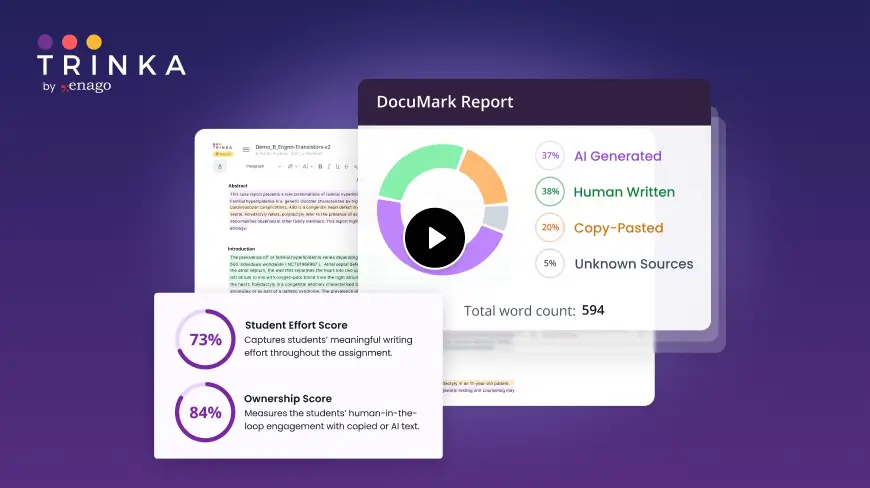
DocuMark: Responsible AI Use for Academic Integrity
Knowing your institution's AI policy is step one. DocuMark helps enforce it fairly by empowering universities to manage AI-generated content, prevent cheating, and support student writing through responsible AI use.
Common Questions About University of Lincoln's AI Policies
University of Lincoln has defined AI policies in 10 of 12 categories, with an overall coverage score of 83%.
The university requires disclosure of AI use and proper attribution of AI-generated content. This applies to users' work generally, and for assessments the university requires clear guidance to students on permitted AI use. AI-generated content must not be presented as one's own without acknowledgment.
The university states that unauthorised AI use is an academic integrity breach and may be treated as an academic offence. It also cautions against using AI tools to check originality because they cannot reliably detect this and may produce false feedback. No explicit university position on formal AI detection platforms such as Turnitin or GPTZero is defined in the provided sources.
The university requires AI use to comply with its broader data protection, information classification, intellectual property, and acceptable use policies. It prohibits inputting personal data into AI systems in the cited guidance, and it requires that uploaded content be allowed by the university or rights holder and properly licensed or used under fair use provisions. The provided sources do not name a specific list of approved AI platforms.