Teaching & Learning
- The UT System policy applies to UT Knoxville and sets a framework where course instructors decide whether, when, and how students may use AI for instructional and assignment purposes
- Faculty/staff delivering a course are expected to clearly communicate permitted AI uses, and students are responsible for following those course-specific requirements; unpermitted use is treated as academic misconduct under the campus student code of conduct
* Each Faculty or Staff Member (to the extent responsible for the delivery of a course) shall consider whether, when, and how AI may be used, if at all, for instructional and assignment purposes associated with a course, including independent study, clinical, and/or research activities.
* Faculty/Staff Members responsible for the delivery of a course are expected to clearly communicate to Students the permitted use(s), if any, of AI technology in connection with a course and the extent to which AI technology and derived content may be used as part of a Student’s academic work.
* Students are responsible for adhering to the requirements set by Faculty/Staff Members with respect to the permitted use of AI technology in each of their courses.
Course-related communications pertaining to the use of AI technology shall: (i) affirm the importance of academic honesty; and (ii) inform Students that the unpermitted use of AI technology is a form of academic misconduct, which violations are subject to the Campus’ student code of conduct.
- Students must follow the instructor’s communicated requirements, and unpermitted AI use is characterized as academic misconduct subject to the campus student code of conduct
- The UT System policy does not set a single AI rule specific to exams; instead, it places decisions about permitted AI use for course work (including assessments) under the authority of the faculty/staff responsible for delivering the course
* Each Faculty or Staff Member (to the extent responsible for the delivery of a course) shall consider whether, when, and how AI may be used, if at all, for instructional and assignment purposes associated with a course, including independent study, clinical, and/or research activities.
* Faculty/Staff Members responsible for the delivery of a course are expected to clearly communicate to Students the permitted use(s), if any, of AI technology in connection with a course and the extent to which AI technology and derived content may be used as part of a Student’s academic work.
* Students are responsible for adhering to the requirements set by Faculty/Staff Members with respect to the permitted use of AI technology in each of their courses.
Course-related communications pertaining to the use of AI technology shall: (i) affirm the importance of academic honesty; and (ii) inform Students that the unpermitted use of AI technology is a form of academic misconduct, which violations are subject to the Campus’ student code of conduct.
- The UT System policy describes AI as a tool that can support learning (e.g., providing definitions, facts, names, dates, or summaries)
- However, whether and how students may use AI in connection with a course remains at the discretion of the faculty/staff delivering that course, and students are responsible for following the instructor’s course requirements
1. Learning – AI can provide definitions, facts, names, dates, or summaries of larger topics.
* Each Faculty or Staff Member (to the extent responsible for the delivery of a course) shall consider whether, when, and how AI may be used, if at all, for instructional and assignment purposes associated with a course, including independent study, clinical, and/or research activities.
* Students are responsible for adhering to the requirements set by Faculty/Staff Members with respect to the permitted use of AI technology in each of their courses.
- Faculty/staff are expected to communicate permitted uses, and students must comply with those course-specific requirements; unpermitted use is identified as academic misconduct subject to the campus student code of conduct
- The UT System AI policy does not provide programming- or code-generation-specific rules; instead, it delegates decisions about AI use for course instructional and assignment purposes to the faculty/staff delivering the course
* Each Faculty or Staff Member (to the extent responsible for the delivery of a course) shall consider whether, when, and how AI may be used, if at all, for instructional and assignment purposes associated with a course, including independent study, clinical, and/or research activities.
* Faculty/Staff Members responsible for the delivery of a course are expected to clearly communicate to Students the permitted use(s), if any, of AI technology in connection with a course and the extent to which AI technology and derived content may be used as part of a Student’s academic work.
* Students are responsible for adhering to the requirements set by Faculty/Staff Members with respect to the permitted use of AI technology in each of their courses.
Course-related communications pertaining to the use of AI technology shall: (i) affirm the importance of academic honesty; and (ii) inform Students that the unpermitted use of AI technology is a form of academic misconduct, which violations are subject to the Campus’ student code of conduct.
Research
- The policy also states that AI technology is to be used in accordance with academic standards pertaining to attribution and citations
- The UT System AI policy indicates that AI generated results may include content protected by intellectual property or other ownership rights, and it places responsibility on authors to ensure allowed use of AI-generated data and information included in academic work
* AI generated results may contain data, images, and other information protected under intellectual property or other ownership rights, including copyright. Authors shall be fully responsible for ensuring the allowed use of any AI generated data and information contained in their academic work.
* AI technology is to be used in accordance with: (i) academic and student codes of conduct/honor codes; (ii) any ethical and professional standards applicable to a particular course or program; (iii) academic standards pertaining to attribution and citations; (iv) University/Campus policies, procedures, and other guidelines; and (v) applicable laws, rules, or regulations.
- Separately, the policy states that faculty, staff, and students may use any AI technology for instructional purposes as long as Protected University Data is not entered into such systems
- The UT System AI policy identifies AI as capable of analyzing quantitative or qualitative data and includes research activities within the scope of course-related instructional/assignment decisions that faculty/staff must consider
3. Analyzing – AI can examine patterns, gain insights, and make informed decisions of quantitative or qualitative data.
* Each Faculty or Staff Member (to the extent responsible for the delivery of a course) shall consider whether, when, and how AI may be used, if at all, for instructional and assignment purposes associated with a course, including independent study, clinical, and/or research activities.
The University shall maintain a list of approved AI technology resources available for use. Faculty, Staff, and Students are free to use any AI technology for instructional purposes so long as Protected University Data is not entered into such systems.
- The UT System AI policy requires that AI technology be used in accordance with applicable ethical and professional standards as well as academic/student codes of conduct
- It also states that course-related communications about AI use must affirm academic honesty and inform students that unpermitted AI use is a form of academic misconduct subject to the campus student code of conduct
* AI technology is to be used in accordance with: (i) academic and student codes of conduct/honor codes; (ii) any ethical and professional standards applicable to a particular course or program; (iii) academic standards pertaining to attribution and citations; (iv) University/Campus policies, procedures, and other guidelines; and (v) applicable laws, rules, or regulations.
Course-related communications pertaining to the use of AI technology shall: (i) affirm the importance of academic honesty; and (ii) inform Students that the unpermitted use of AI technology is a form of academic misconduct, which violations are subject to the Campus’ student code of conduct.
Academic Integrity
- The UT System AI policy states that AI technology is to be used in accordance with academic standards pertaining to attribution and citations
- It does not provide a specific, universal disclosure statement requirement for students, but it requires that course-related communications about AI use affirm academic honesty and inform students that unpermitted use is academic misconduct, and it expects instructors to clearly communicate permitted uses of AI in connection with a course
* AI technology is to be used in accordance with: (i) academic and student codes of conduct/honor codes; (ii) any ethical and professional standards applicable to a particular course or program; (iii) academic standards pertaining to attribution and citations; (iv) University/Campus policies, procedures, and other guidelines; and (v) applicable laws, rules, or regulations.
* Faculty/Staff Members responsible for the delivery of a course are expected to clearly communicate to Students the permitted use(s), if any, of AI technology in connection with a course and the extent to which AI technology and derived content may be used as part of a Student’s academic work.
Course-related communications pertaining to the use of AI technology shall: (i) affirm the importance of academic honesty; and (ii) inform Students that the unpermitted use of AI technology is a form of academic misconduct, which violations are subject to the Campus’ student code of conduct.
- The UT System AI policy states that unpermitted AI use is a form of academic misconduct and that violations are subject to the campus student code of conduct, but it does not define AI detection tools
- The UT Knoxville Student Conduct process page describes procedural steps for handling academic misconduct allegations (e.g., reporting to SCCS and holding academic penalties/grades pending resolution)
Course-related communications pertaining to the use of AI technology shall: (i) affirm the importance of academic honesty; and (ii) inform Students that the unpermitted use of AI technology is a form of academic misconduct, which violations are subject to the Campus’ student code of conduct.
Submit the incident to SCCS by completing the Academic Misconduct Reporting Form. This form initiates the SCCS process.
Per the Code of Conduct, the referring instructor will not assign an academic penalty or a final grade for the course pending resolution of the allegation by SCCS.
Institutional & Administrative
- It also states that faculty, staff, and students may use any AI technology for instructional purposes provided Protected University Data is not entered into such systems
- The UT System AI policy expects each faculty or staff member responsible for course delivery to decide whether, when, and how AI may be used for instructional and assignment purposes, and to clearly communicate permitted AI uses to students
* Each Faculty or Staff Member (to the extent responsible for the delivery of a course) shall consider whether, when, and how AI may be used, if at all, for instructional and assignment purposes associated with a course, including independent study, clinical, and/or research activities.
* Faculty/Staff Members responsible for the delivery of a course are expected to clearly communicate to Students the permitted use(s), if any, of AI technology in connection with a course and the extent to which AI technology and derived content may be used as part of a Student’s academic work.
The University shall maintain a list of approved AI technology resources available for use. Faculty, Staff, and Students are free to use any AI technology for instructional purposes so long as Protected University Data is not entered into such systems.
- The UT System AI policy states the university will maintain a list of approved AI technology resources and permits use of any AI technology for instructional purposes as long as Protected University Data is not entered into those systems
- UT Knoxville OIT describes UT Verse as a university-specific generative AI chat with protections stating that user/business data will not leak outside the organization and that chat data is not shared with third-party groups or used to train public AI models; OIT also advises using Copilot only for general AI conversations that do not include research or proprietary university data
The University shall maintain a list of approved AI technology resources available for use. Faculty, Staff, and Students are free to use any AI technology for instructional purposes so long as Protected University Data is not entered into such systems.
UT Verse AI Assistant is a chat-based, AI-powered platform specific to the University of Tennessee faculty, staff, and students.
* User and business data is protected and will not leak outside the organization.
* Chat data is not shared with third-party groups or used to train public AI models.
Use Copilot for general AI conversations that do not include conversations about your research or proprietary university data.
- The UT System AI policy describes a systemwide framework intended to balance innovation with academic integrity and protection of sensitive information, while allowing campuses flexibility to issue additional procedures/guidelines/restrictions for responsible and ethical AI use for instructional and assignment purposes
- UT Knoxville OIT describes an institutional commitment to support responsible AI adoption, including prioritizing security, data governance, and ethical considerations, and describes UT Verse missions including upholding a high standard of data security and privacy and making the platform available to UT faculty, students, and staff
Through this policy, the Board aims to balance the innovative potential of AI with the need to uphold academic integrity, protect sensitive information, and comply with applicable laws, rules, and regulations.
This policy is intended to provide a framework of broad systemwide expectations while maintaining the necessary flexibility for the Campuses to issue academic procedures, guidelines, and/or restrictions pertaining to the responsible and ethical use of AI for instructional and assignment purposes in a dynamic landscape.
* Ethics and Best Practices: Prioritize security, data governance, and ethical considerations, curate resources, and develop standards to support responsible and innovative AI adoption.
To guide the project’s future, four key missions were defined:
* Mission 3: Uphold the highest standard of data security and privacy.
* Mission 4: Available for all University of Tennessee Faculty, Students and Staff.
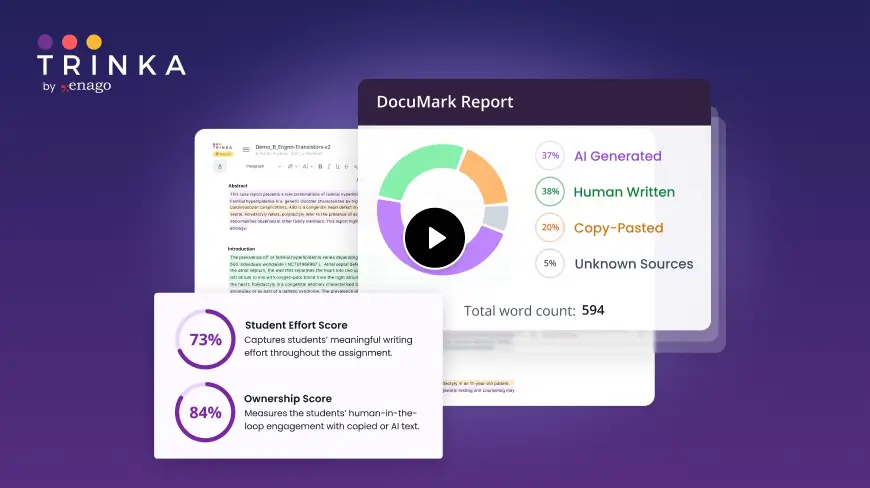
DocuMark: Responsible AI Use for Academic Integrity
Knowing your institution's AI policy is step one. DocuMark helps enforce it fairly by empowering universities to manage AI-generated content, prevent cheating, and support student writing through responsible AI use.
Common Questions About University of Tennessee, Knoxville's AI Policies
University of Tennessee, Knoxville has defined AI policies in 12 of 12 categories, with an overall coverage score of 100%.
The UT System AI policy states that AI technology is to be used in accordance with academic standards pertaining to attribution and citations. It does not provide a specific, universal disclosure statement requirement for students, but it requires that course-related communications about AI use affirm academic honesty and inform students that unpermitted use is academic misconduct, and it expects instructors to clearly communicate permitted uses of AI in connection with a course.
The UT System AI policy states that unpermitted AI use is a form of academic misconduct and that violations are subject to the campus student code of conduct, but it does not define AI detection tools. The UT Knoxville Student Conduct process page describes procedural steps for handling academic misconduct allegations (e.g., reporting to SCCS and holding academic penalties/grades pending resolution).
The UT System AI policy states the university will maintain a list of approved AI technology resources and permits use of any AI technology for instructional purposes as long as Protected University Data is not entered into those systems. UT Knoxville OIT describes UT Verse as a university-specific generative AI chat with protections stating that user/business data will not leak outside the organization and that chat data is not shared with third-party groups or used to train public AI models; OIT also advises using Copilot only for general AI conversations that do not include research or proprietary university data.